When I’m commuting to work in an Uber, I don’t have the mental space for anything. No music, no podcasts, nothing. I’m just sitting there waiting to get to the office.
Most other times though, I’m trying to kill time by looking out the window, listening to some music or podcasts. Quite often, I end up looking at ads on the Uber app.
Most ads I see on Uber aren’t very different from the static billboard versions brands run outside. They’re barely memorable – I suspect users must be tired of seeing them.
What if Uber made these ads more engaging for users? Not in a predictable way like we see everywhere else with auto-playing videos, etc.
Instead by turning these ads more interactive that leads users to actively engage with those ads.
One example is games sponsored by the brand. Games that users can finish in a few seconds or minutes when they have nothing else to do in an Uber.
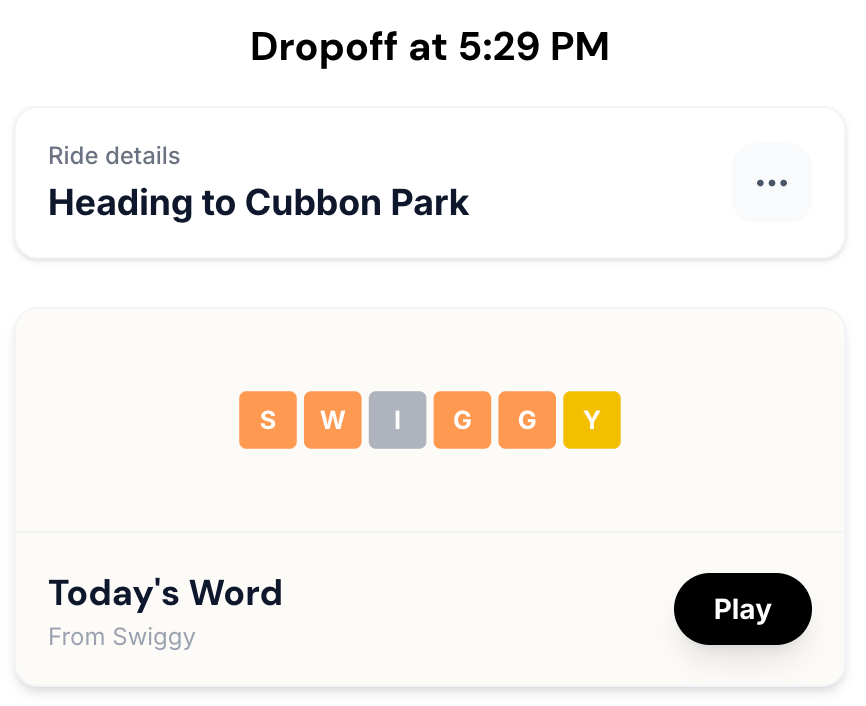
Here’s an example of what that could look like. In this variation, Swiggy is running an ad in the game format – Wordle. This is how it might look:
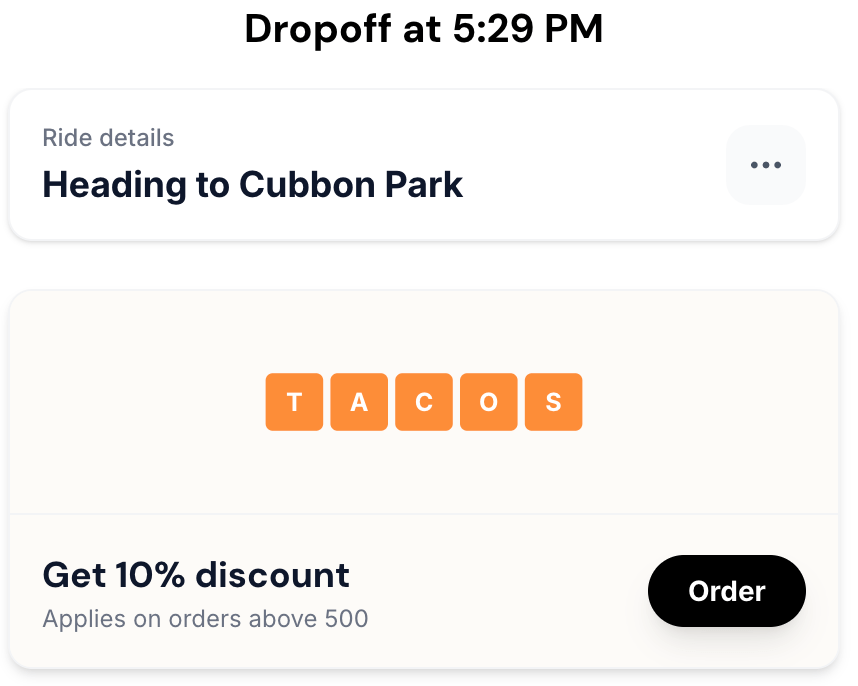
Once the user completes the game, they would see a finish screen that looks like the one below.
Brands can choose to customize the text and call-to-action in the finish screen. In the example below, Swiggy is inviting users to order with a 10% discount.
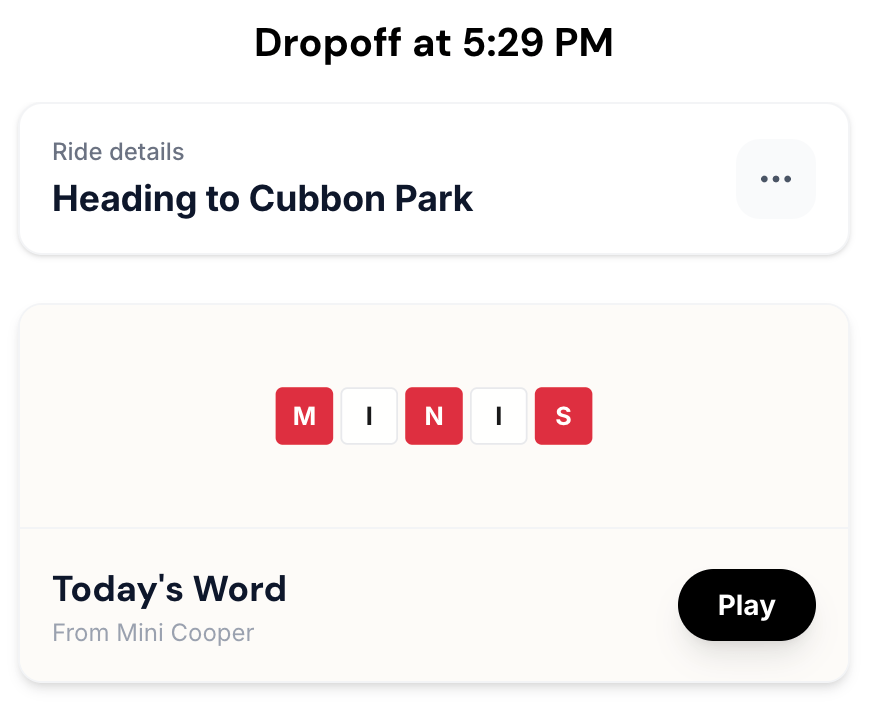
On another day, users might see Mini Cooper running a Wordle ad – imagine they’re announcing the launch of one of their cars.
This is how the ad might look:
When the user completes the game this time, they see a very specific message and call-to-action based on what Mini wants to promote:
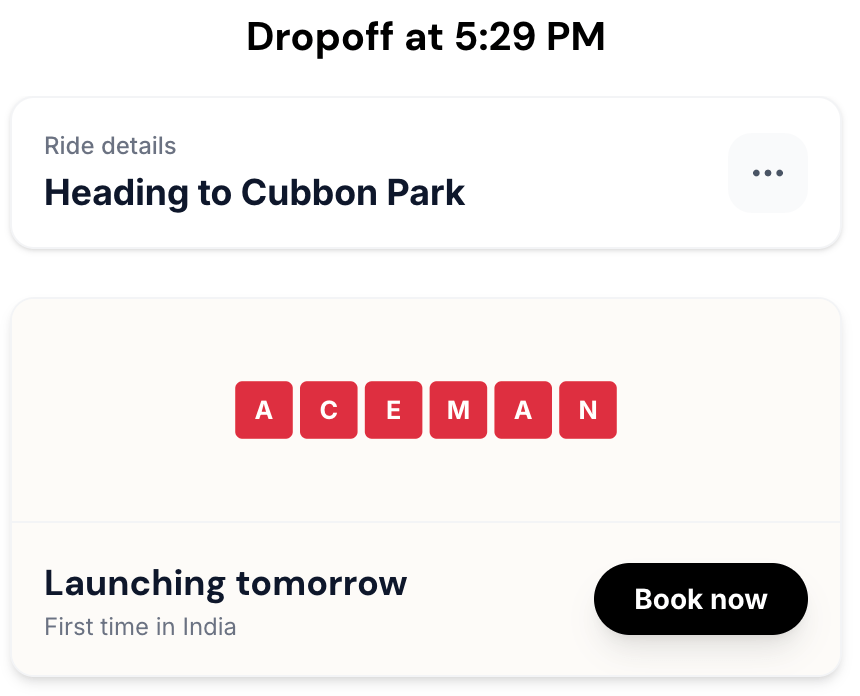
Wordle is just an example, there could be a lot more game formats providing brands more than one way to deeply engage with users and create interesting moments during those boring rides.
Why this might work better for Uber and brands
I suspect users would gladly spend twenty seconds or a few minutes playing such games when they’re not in the mood for anything else.
Although I don’t have empirical data, I believe these ads would get a lot more attention than regular image or video ads (therefore, better monetary ROI).
What do you think?
Caveats
One problem I see is that users who have motion sickness might avoid looking at the phone longer and won’t be able to play games.
In such a situation, Uber can try placing games that need to be finished within a short time span. Alternatively, they could trigger something like iPhone’s vehicle cues for motion sickness prevention.
There’s obviously a performance bottleneck that could arise when games are loaded – that needs to be handled as well.
The UX challenge of what needs to be done when the ride ends before the game ends – that isn’t hard to crack. Uber can let users minimize games into a chip, like they let you minimize a ride today within the app.
 Shankar is thinking